Staying cool during physical activity is essential for athletes, fitness enthusiasts, runners, cyclists, and anyone who enjoys exercising outdoors. Whether you are training under the summer sun, participating in an intense sports competition, or spending hours at the gym, excessive heat can affect your comfort, endurance, and performance.
One simple and affordable way to stay comfortable during exercise is by using a cooling towel. Sports cooling towels are specially designed fabrics that help provide a refreshing cooling sensation when wet. They are lightweight, reusable, portable, and easy to use.
The good news is that you do not necessarily need to purchase expensive cooling towels. You can make your own DIY cooling towels at home using affordable materials and a few simple steps.
In this guide, you will learn how to make cooling towels for sports, which materials work best, how to activate and maintain them, and how to use them effectively during different physical activities.
What Are Cooling Towels for Sports?
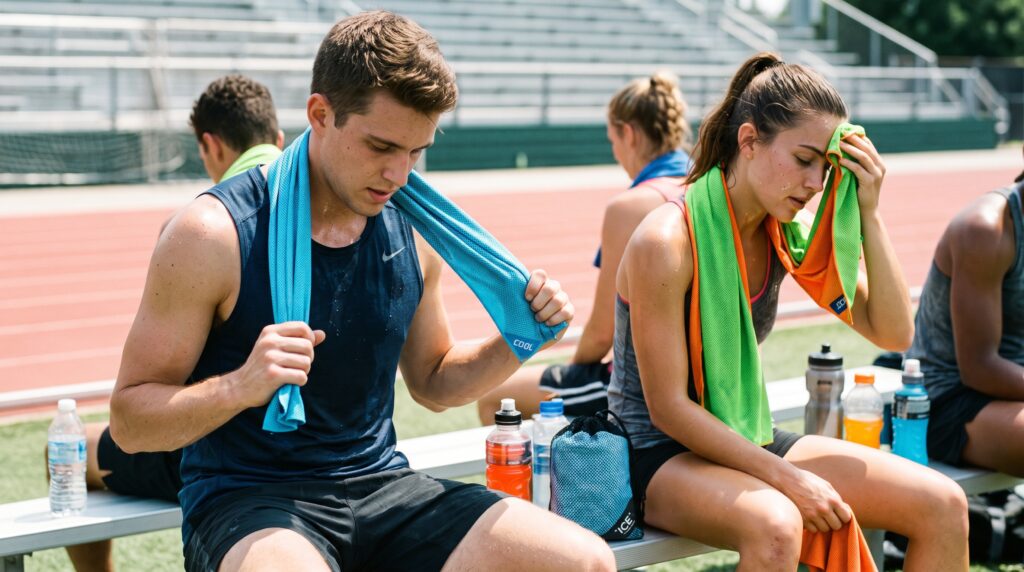
Cooling towels are specially designed towels that help athletes feel cooler during physical activity. Most cooling towels work through evaporative cooling, a natural process in which water evaporates from the fabric and absorbs heat from its surroundings.
When you soak a cooling towel in water, wring out the excess moisture, and place it around your neck or on your shoulders, evaporation creates a refreshing cooling effect.
Unlike ordinary cotton towels, sports cooling towels are often made from lightweight, breathable, and highly absorbent materials that retain moisture while allowing water to evaporate efficiently.
Cooling towels are commonly used for:
- Running and jogging
- Cycling and mountain biking
- Football, basketball, and soccer
- Tennis and badminton
- Hiking and outdoor adventures
- Gym workouts and fitness training
- Yoga and outdoor exercise
- Camping and recreational activities
They are particularly useful during hot-weather activities when athletes need convenient ways to improve comfort.
Benefits of Using Cooling Towels for Sports
Before learning how to make your own cooling towel, it is helpful to understand why these products are popular among athletes.
1. Helps You Feel Cooler During Exercise
The main advantage of a cooling towel is its refreshing sensation.
When water evaporates from the towel, it removes heat from the surrounding area. Placing the damp towel around your neck, shoulders, or forehead can help you feel more comfortable during hot-weather workouts.
2. Lightweight and Portable
Cooling towels are generally lightweight and easy to carry.
You can fold one and place it inside a gym bag, backpack, running belt, or sports equipment bag.
3. Affordable and Reusable
Making your own cooling towel can be inexpensive, especially if you already have suitable fabric at home.
With proper cleaning and maintenance, reusable cooling towels can be used repeatedly.
4. Convenient for Outdoor Sports
Athletes who train outdoors often face changing temperatures and direct sunlight.
A cooling towel provides a convenient way to add localized cooling during breaks, practice sessions, and outdoor competitions.
5. Easy to Customize
DIY cooling towels allow you to choose your preferred:
- Fabric type
- Towel dimensions
- Color and pattern
- Shape and design
- Neck-wrap style
- Personal or team branding
You can even create matching cooling towels for sports teams, fitness groups, or family activities.
Best Materials for Making Sports Cooling Towels
Choosing the right fabric is one of the most important steps in making an effective cooling towel.
Different materials absorb and release moisture differently, so your choice will influence how the towel feels and performs.
1. Microfiber Fabric
Microfiber is one of the most popular materials for sports towels.
It is lightweight, soft, quick-drying, and capable of holding moisture. Many commercial sports cooling towels are made from specialized microfiber or synthetic textile blends.
Advantages include:
- Lightweight construction
- Good moisture absorption
- Quick drying
- Compact storage
- Easy maintenance
Microfiber is an excellent option for a reusable DIY cooling towel.
2. Polyester Fabric
Polyester is commonly used in athletic clothing and sports accessories.
Certain polyester fabrics are engineered to wick moisture and dry quickly. However, ordinary polyester does not necessarily provide the same cooling performance as specialized cooling fabrics.
Choose a lightweight, breathable polyester fabric designed for athletic use.
3. Cotton Fabric
Cotton is another accessible option for homemade cooling towels.
It absorbs water well and feels soft against the skin. However, cotton can become heavy when wet and may take longer to dry.
Cotton works well for a basic homemade cold towel, but it may not provide the same convenience as a specialized sports cooling towel.
4. PVA Cooling Fabric
Polyvinyl alcohol (PVA) cooling fabric is commonly used in commercial cooling towels.
It can absorb and retain significant amounts of water and provide a cooling sensation through evaporation.
PVA towels are often more structured than ordinary fabric towels and require appropriate care to prevent them from becoming stiff when dry.
For beginners, microfiber is generally the easiest material to work with.
How to Make Cooling Towels for Sports: Step-by-Step Instructions
Now let’s look at how to create your own reusable sports cooling towel.
Materials You Will Need
For a basic DIY cooling towel, prepare:
- One piece of lightweight microfiber fabric
- Scissors
- Measuring tape or ruler
- Sewing machine or needle and thread
- Clean water
- A clean storage bag or container
Optional materials:
- Fabric clips
- Polyester sewing thread
- A washable fabric marker
- Rounded-edge scissors
- A small reusable storage pouch
If you are using fabric specifically designed for cooling towels, follow its manufacturer’s sewing and care recommendations.
Step 1: Choose Your Fabric
Start by selecting a suitable fabric.
A lightweight microfiber fabric is a practical choice because it is soft, portable, and designed to handle moisture.
Look for fabric that:
- Feels comfortable against the skin
- Absorbs and releases moisture effectively
- Is lightweight when wet
- Can withstand repeated washing
- Does not have rough or irritating edges
Avoid thick upholstery fabrics and materials that become excessively heavy when soaked.
Step 2: Measure the Towel
Decide how you intend to use your cooling towel.
For a general sports cooling towel, a practical starting size is approximately:
- Length: 30 inches
- Width: 12 inches
You can adjust the dimensions according to your needs.
For example:
- Neck cooling towel: 30 × 12 inches
- Small forehead towel: 18 × 8 inches
- Larger shoulder towel: 36 × 14 inches
These are suggested DIY dimensions rather than universal standards.
Use a measuring tape to mark your preferred size on the fabric.
Step 3: Cut the Fabric
Carefully cut the fabric according to your measurements.
Try to keep the edges straight and even.
If you are making several towels for a sports team, use the first finished towel as a template to ensure consistent dimensions.
Step 4: Finish the Edges
Finishing the edges helps prevent fraying and improves durability.
There are two common methods:
Option A: Sewing
Fold each edge approximately half an inch inward and sew around the perimeter.
Use a lightweight, durable thread suitable for the fabric.
Option B: Serging
If you have an overlock or serger machine, use it to finish the edges.
This creates a neat, professional-looking finish.
Some microfiber fabrics are designed to resist fraying, but check the manufacturer’s recommendations before leaving the edges unfinished.
Step 5: Wash the Towel Before First Use
Wash your newly made cooling towel using a suitable detergent.
Avoid fabric softeners because they can leave residues that reduce moisture absorption.
Rinse thoroughly and allow the towel to dry.
This step helps remove manufacturing residues, dust, and loose fibers.
Step 6: Activate Your Cooling Towel
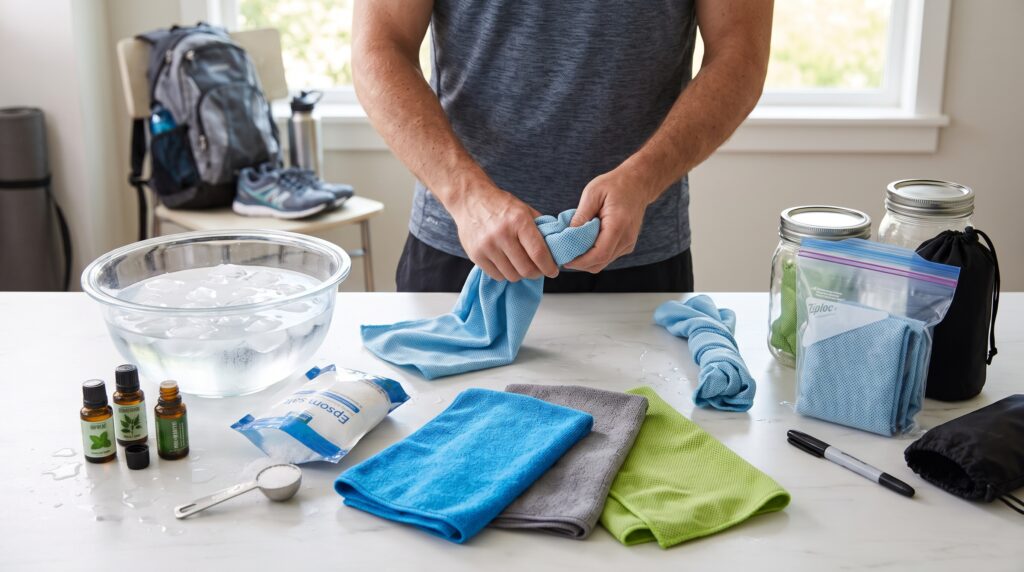
The easiest way to activate your homemade cooling towel is with clean, cool water.
Follow these instructions:
- Fill a clean basin or sink with cool water.
- Place the towel in the water.
- Allow the fabric to become thoroughly wet.
- Remove the towel and gently wring out excess water.
- Shake or unfold it to improve airflow.
- Place it around your neck or over your shoulders.
The towel should be damp rather than dripping wet.
As water evaporates, the towel can provide a refreshing cooling sensation.
Step 7: Refresh the Cooling Effect
After some time, the towel may become warmer or begin to dry.
To refresh it:
- Remove the towel.
- Rinse it with cool water.
- Gently wring out excess moisture.
- Shake it to expose more fabric to the air.
- Reapply it when comfortable.
You can repeat this process whenever necessary.
How to Make an Extra-Cold Sports Cooling Towel
If you want a stronger initial cooling sensation, you can start with chilled water.
Follow these simple steps:
- Fill a clean container with cool water.
- Add a few ice cubes.
- Allow the water to become cold.
- Remove the ice cubes or avoid placing them directly against your skin.
- Soak your cooling towel.
- Wring out excess water.
- Apply the towel to your neck or shoulders.
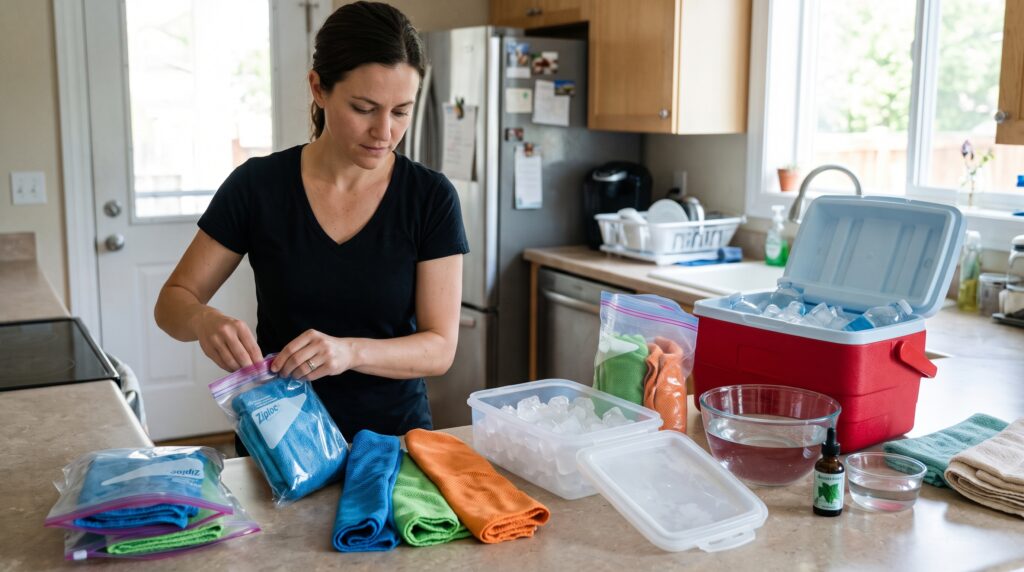
Another option is to place the damp towel inside a clean, sealed bag and refrigerate it briefly before exercise.
Avoid placing extremely cold materials directly against your skin for extended periods.
Remember that the cooling effect of a wet towel depends on evaporation, airflow, humidity, and fabric construction. In very humid conditions, evaporation may be slower.
How to Use Cooling Towels During Different Sports
A cooling towel can be used in several ways depending on your activity.
Running and Jogging
Runners often experience increased body temperature during long-distance training.
A lightweight cooling towel can be folded and placed around the back of the neck.
For longer running sessions, carry a small water bottle so you can re-wet the towel when needed.
Cycling
Cyclists can use cooling towels during rest breaks, training sessions, and outdoor competitions.
A narrow towel can be placed around the neck when stationary.
Make sure the towel is secured and cannot interfere with your helmet, vision, breathing, or bicycle controls.
Never allow loose fabric to hang where it could become caught in bicycle components.
Football and Soccer
Football and soccer players can use cooling towels during breaks and halftime.
Coaches can also keep several clean, damp cooling towels available for players.
Individual towels are preferable for hygiene.
Basketball
Basketball involves frequent bursts of intense physical activity.
Players can use cooling towels during timeouts, substitutions, and breaks between games.
A small towel can be stored in a personal sports bag for easy access.
Gym Workouts
Cooling towels are convenient for indoor exercise.
You can place one around your neck between workout sets or use it to gently wipe perspiration from your face.
For gym use, wash your towel regularly and avoid sharing it with other people.
Hiking and Outdoor Adventures
Hikers can carry a compact cooling towel in their backpacks.
It can be useful during rest stops, especially when exercising in hot weather.
Keep a supply of drinking water available and avoid relying on a cooling towel as your only heat-management strategy.
Tips for Making Your DIY Cooling Towels More Effective
A well-made cooling towel should be comfortable, reusable, and easy to maintain.
Here are some practical ways to improve your results.
Choose Breathable Fabric
Breathable fabric allows air to move through the material and supports evaporation.
This is particularly important when using cooling towels outdoors.
Avoid Excessive Water
A towel that is dripping wet can feel uncomfortable and may interfere with movement.
Wring out excess water before applying it.
Use a Suitable Size
The ideal towel size depends on how you plan to use it.
A longer towel is useful for wrapping around the neck, while a smaller towel may be more convenient for wiping sweat.
Keep a Spare Towel
If you participate in long training sessions, carrying an additional towel can be helpful.
You can use one towel while the other is being cleaned or refreshed.
Maintain Proper Hygiene
Sports towels come into contact with sweat, skin oils, and environmental dirt.
Wash them regularly and allow them to dry completely between uses.
DIY Cooling Towels vs. Commercial Cooling Towels
Should you make your own cooling towel or purchase a commercially manufactured one?
Both options have advantages.
| Feature | DIY Cooling Towel | Commercial Cooling Towel |
|---|---|---|
| Cost | Usually inexpensive | Varies by brand |
| Customization | High | Depends on product |
| Fabric options | Selected by you | Manufacturer-selected |
| Convenience | Requires preparation | Usually ready to use |
| Performance | Depends on materials | Depends on fabric technology |
| Reusability | Yes, with proper care | Usually yes |
A DIY towel is an excellent option if you enjoy making sports accessories and want to control the materials and dimensions.
Commercial cooling towels may be more convenient if you want specialized cooling fabrics or a ready-made product.
How to Clean and Maintain Sports Cooling Towels
Proper maintenance helps extend the life of your homemade cooling towel.
Follow these recommendations:
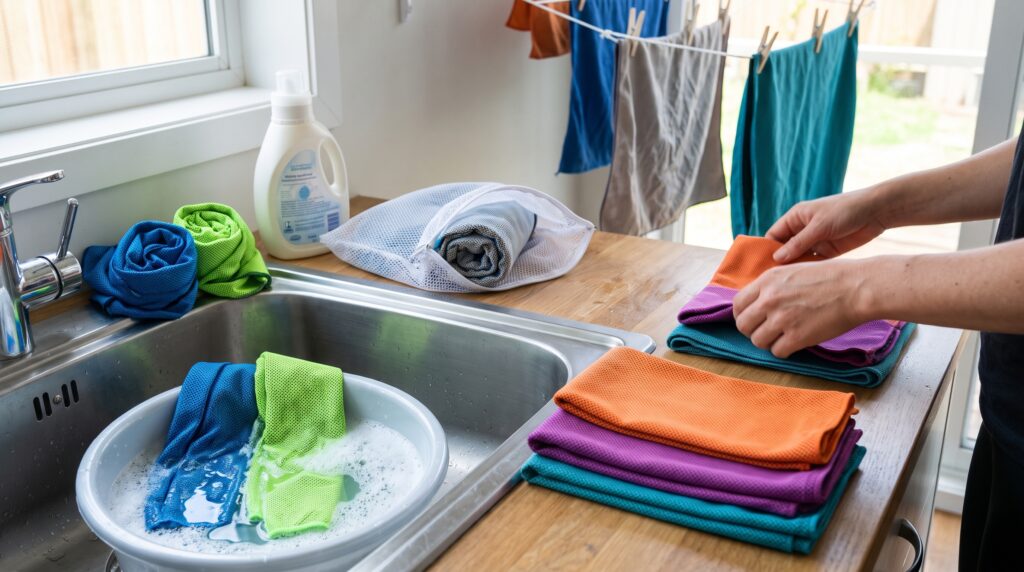
1. Wash after regular use.
Clean the towel after sweaty workouts or outdoor sports activities.
2. Use mild detergent.
Choose a detergent suitable for the fabric.
3. Avoid fabric softeners.
Fabric softeners can reduce the moisture-handling performance of some microfiber materials.
4. Rinse thoroughly.
Remove detergent residue to keep the towel comfortable against your skin.
5. Dry completely.
Allow the towel to air-dry fully before storing it.
6. Store in a clean location.
Keep dry towels in a clean sports bag or storage container.
Do not leave damp towels sealed in a bag for extended periods, as this can encourage unpleasant odors and microbial growth.
7. Inspect regularly.
Replace towels that develop persistent odors, visible mold, damaged seams, or deteriorating fabric.
Common Mistakes to Avoid When Making Cooling Towels
Although making a cooling towel is relatively simple, some mistakes can affect comfort and performance.
Using the Wrong Fabric
Thick fabrics may retain too much water and become uncomfortable during exercise.
Choose lightweight, breathable materials whenever possible.
Adding Too Much Water
A soaking-wet towel can drip onto clothing and become difficult to manage.
Wring out excess water before use.
Using Fabric Softener
Some fabric softeners leave a coating on fibers that can interfere with water absorption.
Avoid them when washing your cooling towel.
Making the Towel Too Small
A towel that is too short may not wrap comfortably around your neck.
Measure carefully before cutting the fabric.
Ignoring Hygiene
Using an unwashed towel repeatedly can cause unpleasant odors and skin irritation.
Clean your towel regularly and never share personal towels without washing them first.
Assuming Cooling Towels Prevent Heatstroke
This is an especially important point.
Cooling towels may improve comfort, but they are not a substitute for proper hydration, rest, shade, or appropriate heat-safety measures.
They should never be considered a guaranteed method of preventing heat exhaustion or heatstroke.
Safety Tips for Using Cooling Towels During Sports
Athletes should take additional precautions when exercising in hot weather.
Here are some important recommendations:
- Drink water regularly during exercise.
- Take breaks in shaded or air-conditioned areas.
- Wear lightweight, breathable sports clothing.
- Avoid intense exercise during the hottest part of the day when possible.
- Monitor how you feel during training.
- Avoid excessively cold materials directly against bare skin.
- Keep cooling towels away from equipment where loose fabric could become caught.
Be alert for signs of heat-related illness, including headache, dizziness, nausea, unusual weakness, and heavy sweating.
If heat exhaustion is suspected, stop exercising, move to a cool area, and begin cooling the body.
Confusion, fainting, seizures, or very high body temperature can indicate heatstroke, a medical emergency. Call emergency services immediately and begin rapid cooling while waiting for help.
Can You Make Cooling Towels for a Sports Team?
Yes! DIY cooling towels can be a practical project for sports teams, schools, fitness clubs, and recreational organizations. Whether you need towels for training sessions, competitions, or outdoor events, customized cooling towels offer a convenient way to keep athletes comfortable.
If you’re planning to produce cooling towels in bulk, working with a professional Sports Towel Manufacturer like Bchtowel can help you achieve consistent quality, customized designs, and reliable production.
Consider these ideas:
Team Colors: Choose microfiber fabric in your team’s preferred colors to create a consistent and recognizable team look.
Custom Designs: Add team logos, names, or slogans using suitable fabric-printing techniques. Bchtowel offers customization options to help bring your team’s designs to life.
Consistent Sizes: Create a standard towel size for all team members, ensuring convenience and uniformity.
Individual Storage: Provide each athlete with a separate, clean storage pouch for easy carrying and hygienic storage.
Bulk Preparation: Prepare cooling towels in bulk before tournaments, outdoor training sessions, and sporting events to ensure every team member has one ready to use.
If you plan to produce cooling towels commercially, carefully test materials for durability, skin comfort, moisture absorption, cooling performance, and repeated washing.
As an experienced towel manufacturer, Bchtowel can be your reliable manufacturing partner for custom sports towels and bulk orders. From fabric selection and logo printing to size customization and packaging, choosing Bchtowel helps your team or business create practical, high-quality sports towels tailored to your needs.