A lot of shoppers ask the same practical question: how big is a standard beach towel? The short answer is that a “standard” beach towel typically falls in the 30″ × 60″ to 35″ × 70″ (76 × 152 cm to 89 × 178 cm) range — large enough to lie on and dry off comfortably. But “standard” masks many useful variations, and the best choice depends on your body size, activity, and storage needs.
Picture this: You’re settling onto warm sand, sunscreen applied, book in hand… only to realize your beach towel barely fits you, let alone your bag, water bottle, or sandy toes. Sound familiar? Choosing the right beach towel size transforms a frustrating outing into pure coastal bliss. Let’s uncover exactly how big a standard beach towel really is—and how to pick your perfect match.
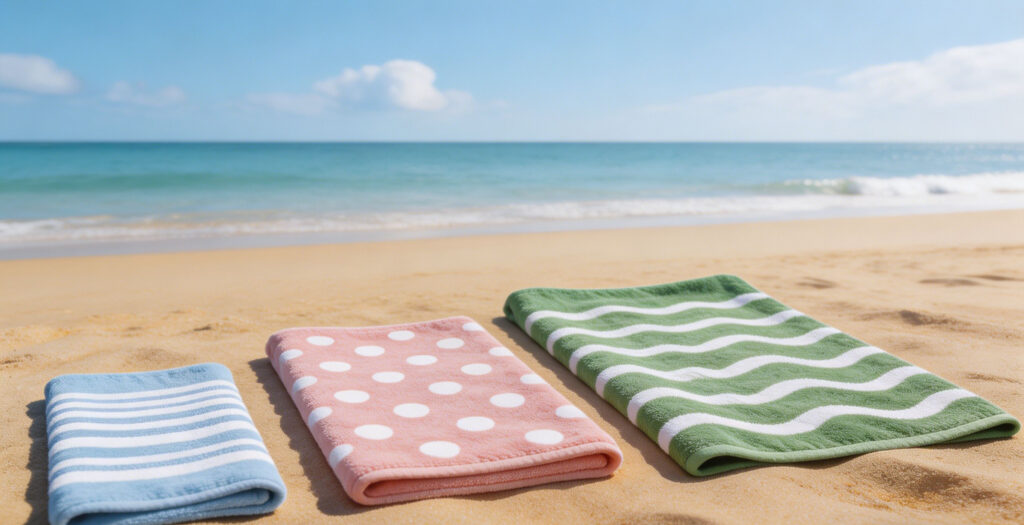
Beach Towel Size: How Big Is Best?
There’s no single “best” towel size for everyone. Size choices depend on how you plan to use the towel:
- Lying on the sand or poolside (coverage + comfort)
- Drying off after swimming (absorbency + surface area)
- Sharing (couples or family beach blankets)
- Travel (compactness vs. coverage)
- Specialty looks (round towels, novelty shapes)
There’s no single “perfect” size—it depends entirely on you. A towel too small leaves you shifting on hot sand; one too large becomes a bulky chore to carry. The sweet spot balances coverage, comfort, and convenience. For most adults seeking everyday use, a standard beach towel (30″ x 60″ / 76 x 152 cm) offers reliable coverage without excess weight. But “best” is personal: a yogi on the shore may prefer compact microfiber, while a family picnic demands extra-large space. Keep reading—we’ll help you define your ideal.
What “Size” Really Means (Width, Length, and Coverage)
When people ask about towel “size,” they usually mean:
- Width — the shorter side (how wide it lays across your body).
- Length — the longer side (from top-of-head to feet when lying down).
- Coverage area — width × length (useful for estimating how much of the sand or pool chair the towel will cover).
Example areas (typical sizes):
- 30″ × 60″ → area = 1,800 in² (≈ 11,613 cm²).
- 35″ × 70″ → area = 2,450 in² (≈ 15,806 cm²).
- 40″ × 80″ (oversized) → area = 3,200 in² (≈ 20,645 cm²).
- Round towel 60″ diameter → area ≈ 2,827 in² (≈ 18,241 cm²).
Knowing the area helps when comparing how many people can sit on a towel or how much of a lounge chair it covers.
Pro Tip: Always check flat-laid measurements. Rolled or folded listings can mislead! Also note: Fabric matters too. Natural fibers (cotton, linen) may shrink 3–5% after first wash—factor this into your decision.
Why Beach Towel Size Matters
Getting size right impacts your entire day:
- Comfort: A too-small towel leaves legs or shoulders hanging off; a too-large towel is bulky to carry.
- Functionality: Towels double as beach blankets, picnic mats, or wraps. The right size determines how well it performs each role.
- Sand Defense: Larger towels create a cleaner “personal zone.”
- Packing and weight: Bigger = heavier and bulkier. If you travel light, size is crucial.
- Drying speed and storage: Larger surface area can mean more material to dry and store.
- Aesthetics: Oversized and round towels make a statement; standard sizes are more utilitarian.
- Eco-impact: One well-sized towel replaces multiple small ones (less laundry, less waste!).
- Safety: Adequate length keeps you fully shaded or covered post-swim.
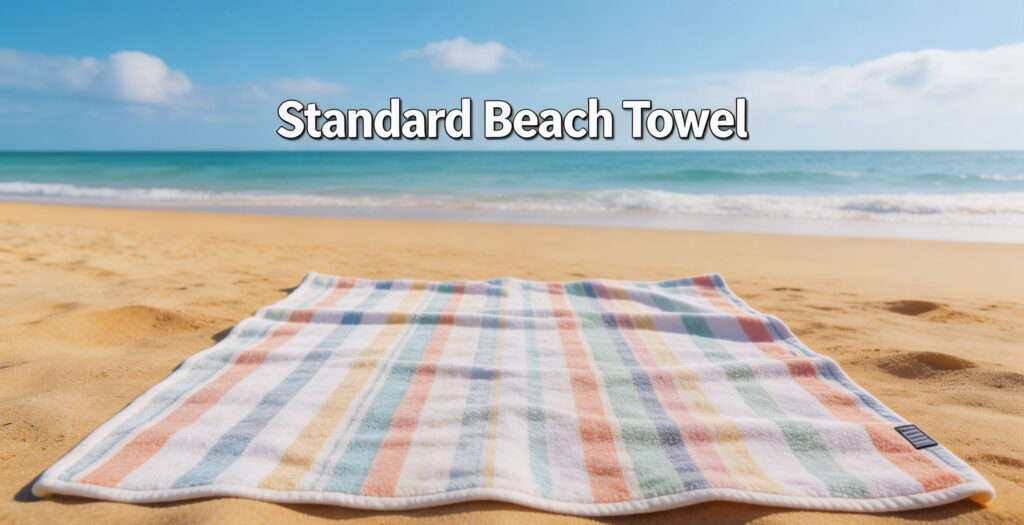
What Is Considered a Standard Beach Towel?
In retail and product listings, a standard beach towel is commonly reported within the 30–35 inch width and 60–70 inch length range (approximately 76–89 cm × 152–178 cm). That size balances:
- Enough space to lie on comfortably for most adults.
- Manageable weight and packability for typical beach gear.
- Good drying area without being cumbersome.
In the U.S. and many global markets, a standard beach towel measures 30 inches wide by 60 inches long (76 x 152 cm). This is deliberately larger than a standard bath towel (27″x52″) to accommodate sand, movement, and sunbathing. However, “standard” varies slightly by brand.
This size comfortably fits most adults (up to ~5’10”) for lounging. Widely stocked by brands like Cannon, Dock & Bay, and Target, it’s the go-to for resorts, gift shops, and everyday beachgoers. Note: Regional variations exist—European standards often run slightly narrower (28″x59″).
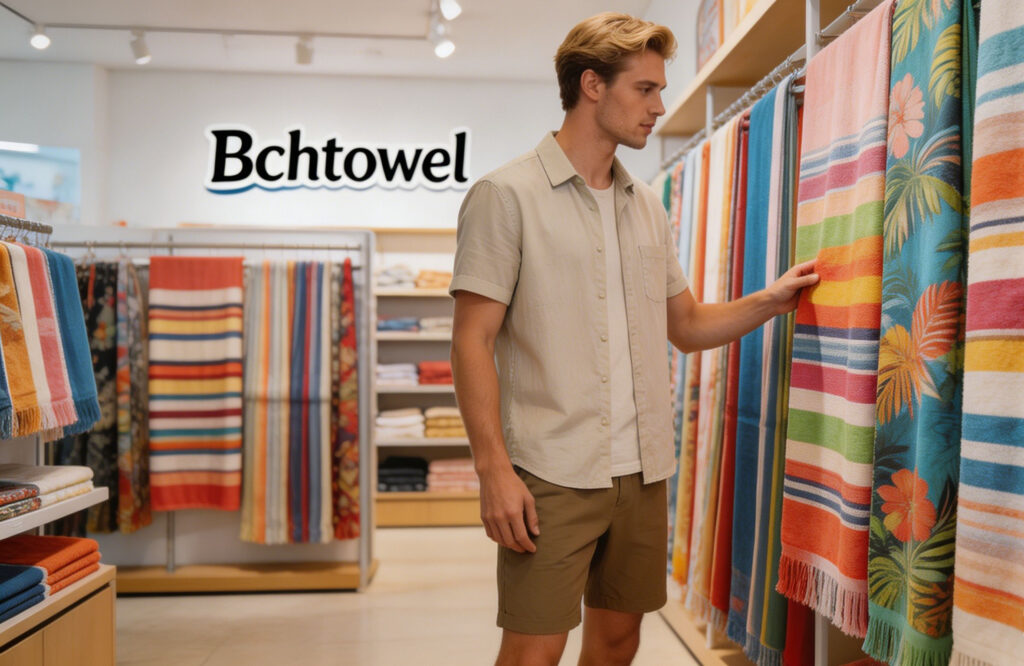
If you have more specific needs and towel designs, then Bchtowel is the best choice for you. They are a professional beach towel manufacturer and offer all services related to beach towels.
Common Beach Towel Sizes and Their Uses
Standard Size Beach Towels
Typical dimensions: ~30″ × 60″ to 35″ × 70″ (76 × 152 cm to 89 × 178 cm)
Best for: Single adult use—sunbathing, poolside chairs, general drying. These are the workhorses sold in most stores. They’re compact enough for a beach bag yet large enough for a comfortable lie-down. Lightweight cotton or quick-dry microfiber options pack easily. Perfect if you prioritize portability without sacrificing comfort.
Oversized Beach Towels
Typical dimensions: ~36″ × 72″ to 40″ × 80″ (91 × 183 cm to 102 × 203 cm)
Best for: Taller adults, those who like extra coverage, or people who want to double as a wrap or sarong. Oversized towels are also handy when you want to spread out with gear beside you.
Extra width accommodates broader frames; added length prevents foot exposure. This size adds luxurious space for lounging, reading, or sharing with a partner. Popular for resort stays or relaxed beach mornings. Slightly heavier—best for car trips vs. backpacking.
Extra-Large and Family Beach Towels
Typical dimensions: ranges can vary; some “family” towels or beach blankets start around 60″ × 80″ (152 × 203 cm) or larger.
Best for: Couples, families, or anyone who wants blanket-style coverage. These are great for picnics or for laying out baby gear, but they’ll take more space in your tote and may be heavier. Look for reinforced edges to handle frequent use.
Storage note: Requires large tote or dedicated beach cart.
Round and Specialty Beach Towels
Typical diameters: 50″–70″ (127–178 cm) commonly; 60″ (152 cm) is popular.
Best for: Style statements, yoga-on-the-beach, social media shots, and sharing in a small group. Round towels offer a larger usable area near the center, and their shape resists blowing corners.
Stylish, space-efficient, and sand-resistant (no corners to flip!). Ideal for Instagram-worthy setups, yoga on sand, or kids who love spinning patterns. Some include carry straps or hidden pockets.
Finding Your Perfect Fit Among Towel Sizes
Ask yourself these quick questions:
- How tall am I? → Choose length ≥ your height + 6 inches.
- Where am I going? → Backpack trip? Prioritize compact. Car day? Go oversized.
- Who’s using it? → Solo adult? Standard. Toddler? 24″x48″ is plenty.
- What’s my priority? → Sand coverage? Size up. Quick dry? Microfiber > heavy cotton.
If you want one beach towel that handles most needs, a 35″ × 70″ is an excellent compromise.
Beach Towel Size and Use-Case Guide
| Scenario | Recommended Size | Why It Works |
|---|---|---|
| Solo sunbathing | Standard (30″x60″) | Balanced coverage, easy to shake sand off |
| Couples/friends sharing | Oversized (36″x70″) | Ample shared space without crowding |
| Family beach day | XL/Family (50″x80″+) | Creates a defined, sand-minimized zone |
| Travel/packing light | Compact microfiber (24″x48″) | Fits in suitcase corner, dries in 20 mins |
| Kids (ages 3–10) | Youth size (24″x48″) | Lightweight, fun prints, easy for small hands |
| Yoga or active use | Round (60″ diameter) | No corners, non-slip potential, portable |
Factors That Influence Beach Towel Size
- Body Type: Taller? Add 4–6″ in length. Broader shoulders? Prioritize width.
- Primary activity: drying vs lounging vs sharing
- Fabric type: Microfiber compresses smaller than cotton—size up if portability is key.
- Brand target audience: kids vs adults vs luxury buyers
- Local culture: European towels often run smaller; Australian brands favor generous cuts.
- Storage reality: Do you have closet space for folded XL towels? Be honest!
- Climate: Humid areas? Quick-dry fabrics prevent mildew in packed bags.
- Multi-use needs: Planning to use it as a picnic blanket? Prioritize width.
- Style trends: round towels and oversized formats have become more popular
- Packing and transport constraints: airline or luggage space
How To Choose the Right Beach Towel Size
For Adults
Aim for minimum 60″ length. If you’re over 5’10”, choose 68″+. Width-wise, 32″+ prevents shoulder exposure. For curvy bodies, wider = more comfort. Pro move: Lay a tape measure on your floor to visualize coverage!
For Kids
Smaller size = faster drying = happier kids!
- Ages 2–6: 20″x40″ (lightweight, easy to carry independently).
- Ages 7–12: 24″x48″ (grows with them, still manageable).
For toddlers, choose towels with fun prints and easy-to-handle sizes.
Bonus: Bright colors/patterns make spotting them in crowds easier—and cleanup less stressful!
Travel and Packing Light
Microfiber is your ally! A compact 28″x55″ towel weighs under 10 oz, dries in 20 minutes, and fits in a side pocket. Roll (don’t fold) to save space. Pro traveler hack: Choose reversible prints to hide light sand stains.
Choose microfiber towels labeled “travel-sized”. They weigh ounces, pack to wallet-size, and dry 3x faster than cotton. Ideal for backpacking, cruises, or spontaneous dips.
Match the Towel to the Activity
- Sunbathing: prioritize length and width for comfort.
- Surfing/Swimming: Oversized for full-body drying.
- Beachcombing: Standard size—easy to tuck in a tote.
- Beach reading: Oversized—room for book, water bottle, snacks.
- Post-surf rinse: Compact microfiber—fits in board bag pocket.
- Festival/Camping: XL family towel doubles as ground cover.
- Spa/Pool: Standard cotton for plush absorbency.
Care, Folding, and Storage Tips Based on Size
Dry fully before storage: Larger towels trap more moisture—hang them flat or draped until completely dry to prevent mildew.
Fold vs roll:
- Roll for compact travel and quick-to-pack scenarios.
- Fold for storage on shelves; it stacks neater and takes less visual space.
Use compression straps or a mesh bag for oversized towels to reduce bulk when loading into a car.
Washing: Follow label directions; avoid fabric softener for terry towels (it can reduce absorbency). Wash oversized towels with a load size setting that prevents overpacking your machine.
Storage: Store heavier/oversized towels flat or rolled; keep them in a breathable space to avoid mustiness. Consider vacuum bags for long-term off-season storage (but ensure towels are bone-dry first).
Final Tip: Sprinkle baking soda in your beach bag under the towel—it absorbs residual moisture and odors!
Frequently Asked Questions (FAQs)
A standard beach towel is usually around 30 x 60 inches to 35 x 70 inches. This size offers enough coverage for lounging, drying off, and relaxing at the beach, pool, or spa.
Beach towels come in several common sizes, including standard beach towel size, oversized beach towels, and extra-large beach towels. Smaller options are easier to carry, while larger towels provide more comfort and coverage.
A beach towel is usually larger than a bath towel. While a bath towel is often around 27 x 52 inches, a beach towel is made to be longer and wider for better sunbathing, drying, and full-body coverage.