If you’ve ever spent a day at the beach, you know the frustration of dealing with a soggy, heavy towel that refuses to dry. Not only does it make packing up messy, but it can also lead to unpleasant odors and bacteria buildup. That’s where the search for the quickest drying beach towel comes in—a solution that combines comfort, practicality, and hygiene.
In today’s fast-paced, travel-friendly world, people no longer want bulky towels that take hours to dry. Instead, both everyday beachgoers and wholesalers in the B2B market are demanding innovative fabrics that dry in a fraction of the time. Whether you’re a beginner buying your first beach towel, or a retailer sourcing bulk orders for customers, understanding quick-dry technology can help you make smarter choices.
Why Drying Speed Matters at the Beach
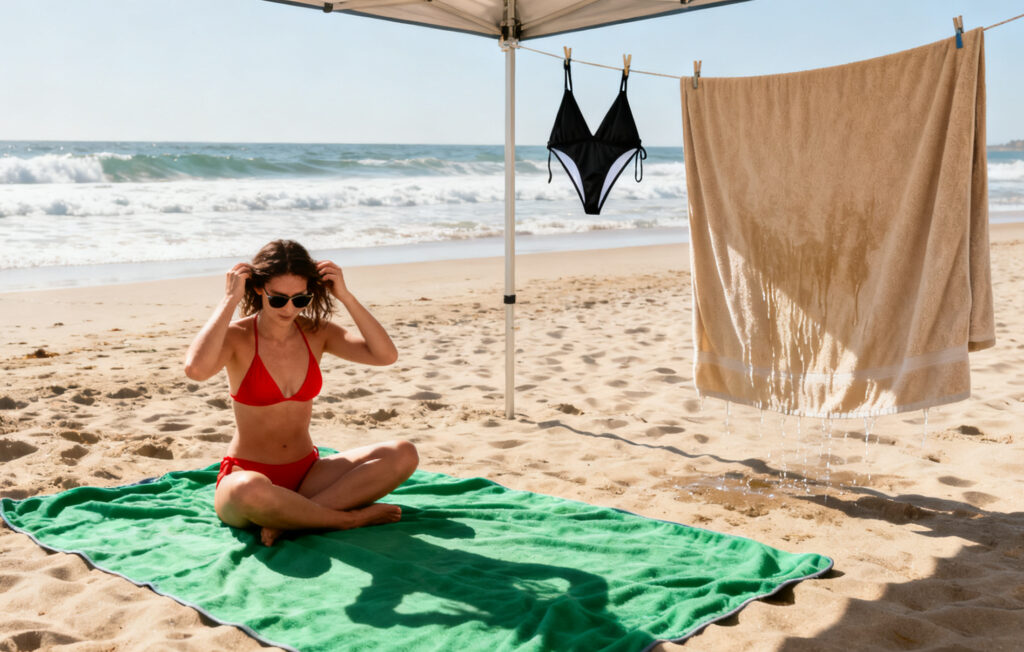
A beach towel isn’t just a piece of fabric; it’s a travel essential. Drying speed is more than just a convenience—it directly impacts comfort, cleanliness, and portability.
- Hygiene
- Damp towels create the perfect environment for bacteria and mildew, leading to bad odors. Quick-dry beach towels minimize these risks by staying fresh between uses.
- Travel Convenience
- When you’re moving from beach to hotel—or hiking from one campsite to the next—waiting hours for a towel to dry isn’t practical. A lightweight beach towel that dries in half the time saves space and hassle.
- Comfort
- Nobody enjoys wrapping themselves in a soggy towel. Quick-dry fabrics ensure comfort after every swim.
- Outdoor & Beach Use
- Whether you’re surfing, swimming, or playing beach volleyball, you want a beach towel that’s ready for multiple uses in one day.
For travelers, backpackers, and surfers, a lightweight, fast-drying beach towel is a game-changer. Quick-dry beach towels reduce the chances of mildew, bacteria, and bad odors. keeping your skin fresher and safer. Thus enhancing your travel and beach experience.
For wholesalers and retailers, stocking quick-dry beach towels is a smart business decision. These products meet customer demand, reduce return rates (thanks to better durability), and often have higher resale value.
Key Factors That Affect Towel Drying Time
1. Material
- Microfiber: Extremely fast-drying thanks to fine synthetic filaments.
- Cotton terry: Plush but slow to dry; holds a lot of water in loops.
- Turkish cotton: Thinner than standard cotton; dries faster but not as quick as microfiber.
- Linen: Naturally lightweight and fast drying, though less absorbent.
- Bamboo blends: Absorbent and eco-friendly but slower to dry than microfiber.
2. Weave / Construction
- Terry loops: Thick, highly absorbent, but trap water.
- Velour: Smooth surface, slightly faster than terry.
- Waffle weave: Lightweight with pockets that speed evaporation.
- Flat-weave/mesh: Minimal bulk, fastest drying.
3. GSM / Thickness
GSM (grams per square meter) measures density. Lower GSM (200–350) means lighter towels that dry faster. High GSM (500–700) towels feel plush but take hours to dry.
Quick-dry beach towels usually have 200–400 GSM, striking a balance between lightness and efficiency.
4. Fiber Density & Surface Area
Fine fibers with larger surface exposure allow water to evaporate quickly—one reason microfiber excels.
5. Environmental Conditions
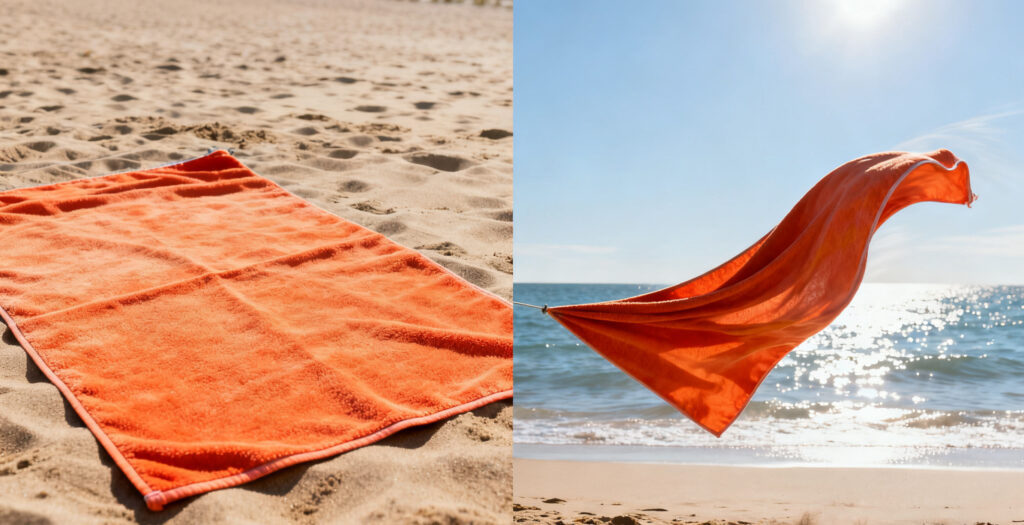
Sun, wind, and humidity affect drying. Even the best towel dries slowly in humid, still air but much faster in direct sunlight with good airflow.
6. Anti-Microbial and Odor-Resistant Features
Some modern quick-dry beach towels are treated with antibacterial coatings or woven with fibers that resist odor. This makes them especially appealing to frequent travelers, fitness enthusiasts, and B2B buyers in hospitality sectors. The drying speed depends on the production quality and craftsmanship of the beach towel manufacturer.
How Drying Speed Is Tested
Beach towel Manufacturers often measure drying speed under controlled conditions to ensure performance:
- Standardized Absorption Test: The beach towel is soaked in water, wrung out, and weighed.
- Drying Simulation: It is then air-dried in a set temperature and humidity environment.
- Time Measurement: The time it takes to reach a “dry-to-touch” state is recorded.
These tests help compare different fabrics and ensure the towel delivers on its “quick-dry” promise.
Types of Quick-Dry Beach Towels on the Market
Here’s how common towel types stack up:
| Towel Type | Drying Speed | Absorbency | Feel | Best Use Cases |
|---|---|---|---|---|
| Microfiber (waffle/flat) | Very Fast | High for weight | Smooth, compact | Travel, beach, sports |
| Waffle weave cotton | Fast | Medium | Light cotton feel | Beach, pool |
| Linen | Fast | Medium-low | Crisp, airy | Travel, eco-luxury |
| Turkish cotton (thin) | Medium-Fast | High | Plush but lighter | Resort, family beach |
| Cotton terry (classic) | Slow | Very High | Thick, cozy | At-home use |
- Microfiber Towels – Lightweight, highly absorbent, and dry up to 3 times faster than cotton.
- Turkish Cotton Towels (Peshtemals) – Thinner than traditional cotton towels, they dry faster while staying soft.
- Bamboo Blend Towels – Eco-friendly and antimicrobial, though drying speed varies depending on the fabric mix.
- Polyester-Nylon Blends – Often used for sports towels, they dry quickly and resist mildew.
Takeaway: Microfiber towels consistently dry the quickest, while cotton terry towels take the longest.
Why Microfiber Towels Are the Quickest
Microfiber has become the gold standard for quick-drying beach towels. Here’s why:
- Ultra-Fine Fibers: Microfiber threads are thinner than human hair, allowing more air circulation. Fibers are 1/16th the thickness of human hair, which increases surface area for evaporation.
- Compact design: Thin structure means less fabric to dry.
- Low water retention: Synthetic fibers don’t hold water deep inside loops.
- Travel-friendly: Lightweight and packs into small pouches, perfect for backpacking or beach trips.
- Moisture Wicking: They pull water away from the skin quickly but don’t hold onto it.
- Sand-Free Design: Many microfiber towels naturally repel sand, making them cleaner and easier to shake off.
Compared to cotton, microfiber towels can dry in under an hour in sunlight, making them the quickest choice for beachgoers and travelers alike.
How to Choose the Best Quick-Drying Beach Towel
When buying for personal use—or for bulk wholesale orders—consider:
- Material: Choose microfiber for fastest drying; waffle weave cotton for a natural option.
- GSM: Aim for 200–350 GSM for a balance of absorbency and quick drying.
- Size & weight: Larger towels take longer to dry; travel versions pack smaller.
- Sand resistance: Some microfiber towels are designed to repel sand.
- Odor control: Look for antimicrobial treatments if you’ll use the towel often.
- Care: Machine washable and durable fabrics ensure long-lasting use.
- Durability: Reinforced edges and high-quality stitching extend the towel’s life.
- Extra Features: Some towels are antibacterial, sand-resistant, or UV-protective.
If you are a wholesaler or retailer, the most important factor in choosing a quick-drying beach towel is finding the right beach towel manufacturer. They can help design towels and brand logos. They have accurate forecasts of beach towel market trends and can assist you in expanding into new markets and creating greater brand value.
Care & Maintenance Tips for Quick-Dry Beach Towels
To keep your towel performing at its best:
- Wash Gently: Use cold water and avoid fabric softeners, which reduce absorbency.
- Air Dry When Possible: While they dry quickly, natural air drying preserves fabric quality.
- Shake Off Sand: Before washing, shake thoroughly to prevent clogging your washing machine.
- Avoid High Heat: Excessive dryer heat may damage microfiber fibers.
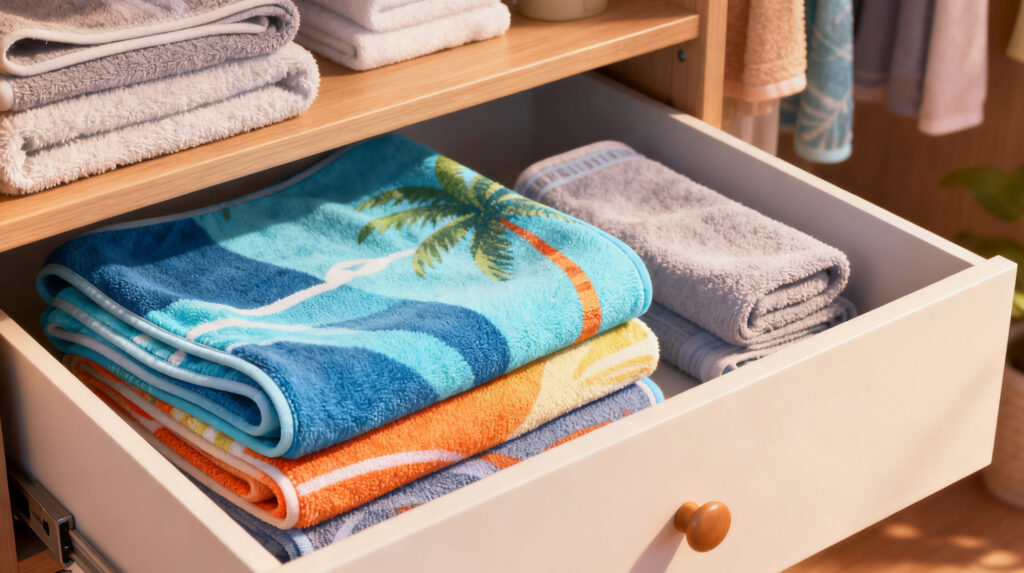
- Store dry: Always dry fully before packing to prevent mildew.
With the right care, your quick-dry towel can last years while staying fresh and effective.
Conclusion
In the ever-evolving world of beach gear, quick-drying beach towels are no longer just a luxury—they are a necessity for travelers, beachgoers, and wholesalers looking to meet customer demand. Whether you’re seeking a microfiber towel for quick drying, an eco-friendly option for sustainability, or a luxury towel for resorts, this guide has you covered.
By understanding fabric technology, key features, and top picks for 2025, you can make an informed decision that balances comfort, performance, and value. Whether you’re a beginner or a B2B buyer, finding the best towel will make your beach days more enjoyable and your business more successful.
Frequently Asked Questions (FAQs)
The fastest drying beach towel is made of microfiber. Microfiber towels dry quickly, absorb water efficiently, and are lightweight—perfect for the beach or pool.
Microfiber towels are the best for quick drying. They dry fast, are highly absorbent, and compact, making them ideal for travel, beach days, or the gym.
Yes, quick dry beach towels work effectively. Made from materials like microfiber or fast-drying cotton, they absorb moisture rapidly and dry within minutes, offering convenience at the beach.
Microfiber dries faster than cotton. Its fine fibers absorb water quickly and release it faster, making it more efficient for quick drying compared to thick cotton towels.
Some quick-drying towels, especially microfiber towels, can be eco-friendly if made with recycled materials. However, microfiber production may contribute to microplastic pollution, so check for sustainable certifications.
Check the towel’s material (microfiber or quick-drying cotton), absorbency, durability, and weight. Request samples to test quality and ensure they dry fast and feel soft. Verify eco-friendly manufacturing practices when possible.