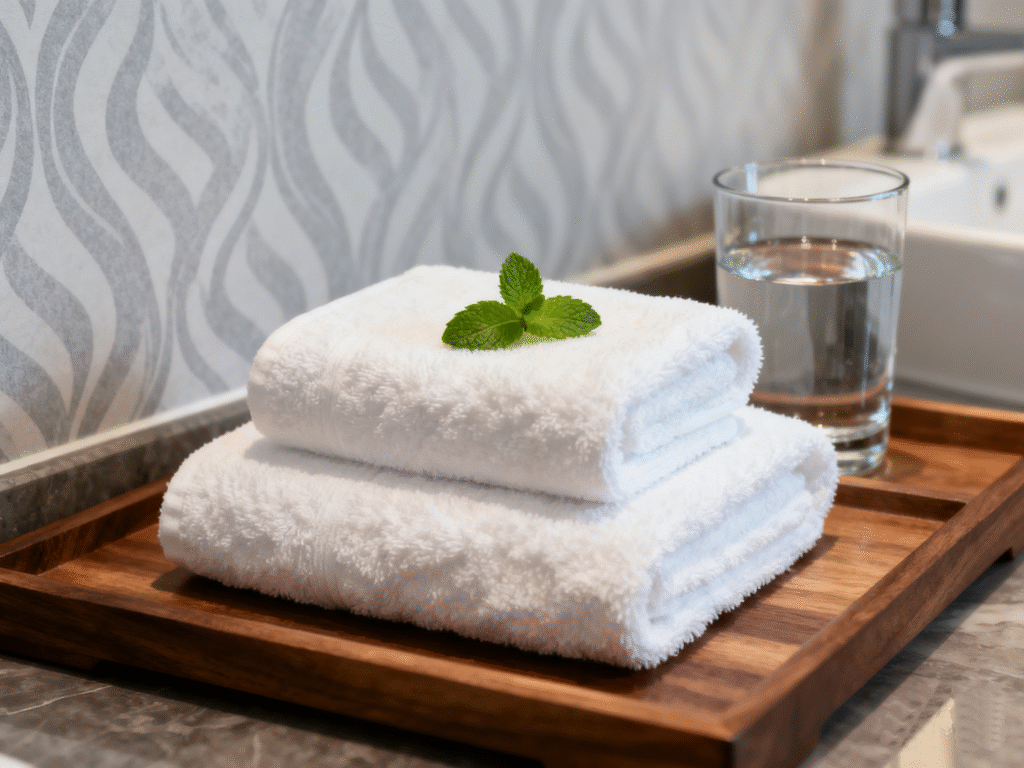
When guests step into a hotel bathroom, one of the first tactile experiences they have is the touch of a towel. The sensation of a soft, fluffy towel against the skin silently communicates luxury, cleanliness, and care. For hotels, maintaining that signature softness is not just about comfort — it’s about branding. In an industry where every sensory detail shapes guest satisfaction, the question “how do hotels keep towels soft?” becomes far more than a housekeeping curiosity; it’s a science and an art.
Hotel towels endure hundreds of washes, industrial laundering, and near-constant use — yet somehow, the best hotels keep them luxuriously soft and fresh. Achieving that level of softness requires precise control over fabric choice, washing chemistry, water quality, drying technique, and ongoing maintenance.
As bchtowel, a professional global supplier to the hospitality industry, often emphasizes: “Softness isn’t an accident — it’s engineered into every loop of fiber, every wash cycle, and every fold.”
In this definitive guide, we’ll explore every layer of that process — from the molecular structure of cotton fibers to the high-tech laundry systems used in world-class hotels — and how B2B buyers can apply the same principles to elevate their guest experience.
Understanding How Hotels Keep Towels Soft — The Science of Fabric and Feel
The Fabric Foundation: Why Cotton Type Matters
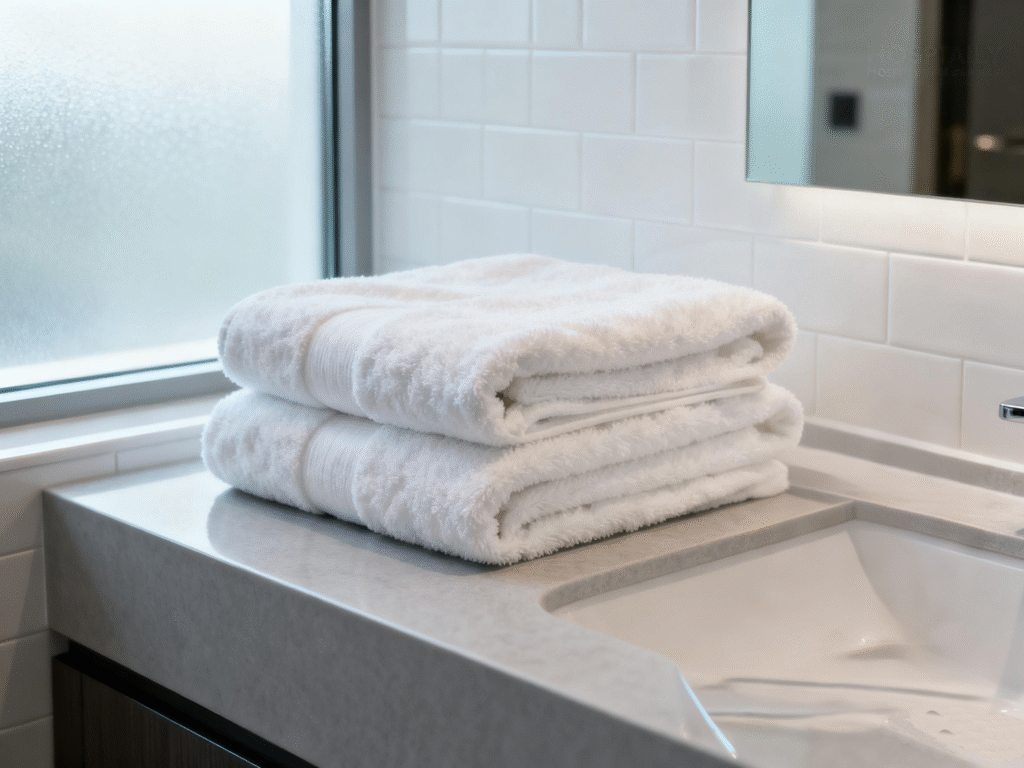
The softness of a towel begins long before it reaches a guest room — it starts in the cotton fields. Not all cotton is created equal. The type, length, and weave of cotton fibers determine how soft, durable, and absorbent a towel can be.
- Egyptian Cotton: Known for extra-long staple fibers, producing a smooth, silky texture.
- Turkish Cotton: Slightly shorter staples but with superior absorbency and quick-dry properties, ideal for hotels in humid regions.
- Supima Cotton (U.S.): Offers durability and luster while retaining a plush hand-feel.
Fiber length directly affects the tactile experience: longer fibers twist into smoother yarns with fewer exposed ends, reducing the roughness that can develop after repeated washes.
GSM (grams per square meter) is another metric B2B buyers must understand — a 600–700 GSM towel typically balances absorbency and softness for premium hotel use, while lower GSM (400–500) suits mid-range properties or tropical climates.
Luxury chains like the Four Seasons or Ritz-Carlton often standardize towel GSM and cotton type to maintain a consistent “brand feel.”
bchtowel offers custom GSM configurations tailored for both high-turnover resorts and boutique hotels, allowing buyers to choose the ideal balance of softness, weight, and drying efficiency.
The Hidden Chemistry of Softness
Softness isn’t just about fibers — it’s also about chemistry. Water hardness, pH balance, and detergent type play crucial roles in how towels feel after laundering.
- Hard water (rich in calcium and magnesium) leaves mineral residues that stiffen fabrics.
- Alkaline detergents strip natural cotton oils and roughen the loops.
- Excessive softener use creates build-up, trapping detergent and reducing absorbency.
In professional laundering, the target rinse pH is around 6.5–7.5, mirroring neutral water conditions. Many top hotels install water softening systems or use ion-exchange filtration to ensure a consistent rinse quality.
bchtowel develops fibers pre-treated with neutral pH resilience — minimizing the reliance on fabric softeners while maintaining that “freshly new” softness after each wash. This not only enhances tactile comfort but also extends towel lifespan, reducing operational costs for B2B clients.
How Do Hotels Keep Towels Soft Through Professional Washing Techniques
Temperature, Timing, and Technique
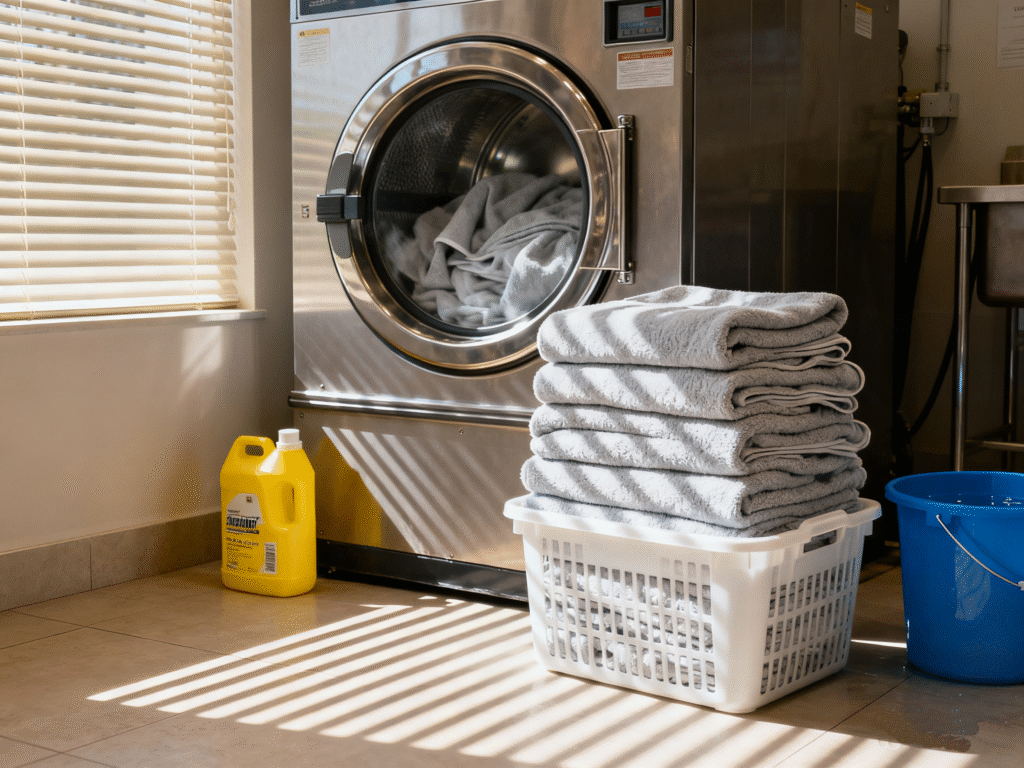
In the professional laundry world, softness is won or lost during the wash cycle. Temperature, agitation, and time must be balanced with precision.
- Wash temperature: 40–60°C is ideal — high enough to remove oils and bacteria, low enough to prevent fiber damage.
- Agitation control: Too vigorous, and fibers fray; too gentle, and detergent residue remains.
- Cycle timing: Over-washing strips fibers; under-washing leaves build-up.
A real-world example: a 300-room hotel might process over 600 towels per day. Their laundry systems are calibrated with digital timers and weight sensors to maintain uniform results — soft, fluffy towels every time.
Hotels that outsource laundering often require suppliers to meet strict texture and absorbency standards. These standards are often guided by suppliers like bchtowel, which provides detailed washing protocol recommendations along with every product line.
The Role of Commercial Detergents and Additives
Commercial laundries use carefully formulated detergents that differ vastly from household products. They combine surfactants, enzymes, and alkalis to break down oils and stains without fiber damage.
- Surfactants reduce surface tension, lifting dirt.
- Enzymes dissolve protein-based stains like sweat.
- Alkalis neutralize fatty acids from skin contact.
While these compounds ensure cleanliness, overuse can roughen the fibers. That’s why hotels use automated dosing systems that precisely measure detergent based on load weight and water hardness.
bchtowel advises B2B clients to opt for pH-neutral or mildly acidic detergents and to avoid brightening agents that can degrade fiber loops over time. The company’s internal research shows that neutral formulations can extend towel softness by up to 20% over 200 wash cycles.
Rinsing and Water Quality
Rinsing is often underestimated. Incomplete rinsing traps detergent residues, which later stiffen towels when dried.
Hotels in areas with hard water (like London or Los Angeles) often experience chronic stiffness issues unless they use water-softening systems. These systems exchange calcium ions with sodium, preventing mineral buildup.
Pro Tip:
Hotels should test water hardness at least once per quarter. If hardness exceeds 120 ppm, a filtration or ion-exchange system is strongly recommended.
bchtowel integrates this principle into its global client advisory, offering tailored guidance on water compatibility based on local conditions — an often-overlooked but critical factor in preserving towel softness.
How Do Hotels Keep Towels Soft with Smart Drying and Finishing Practices
Mechanical Drying vs. Line Drying
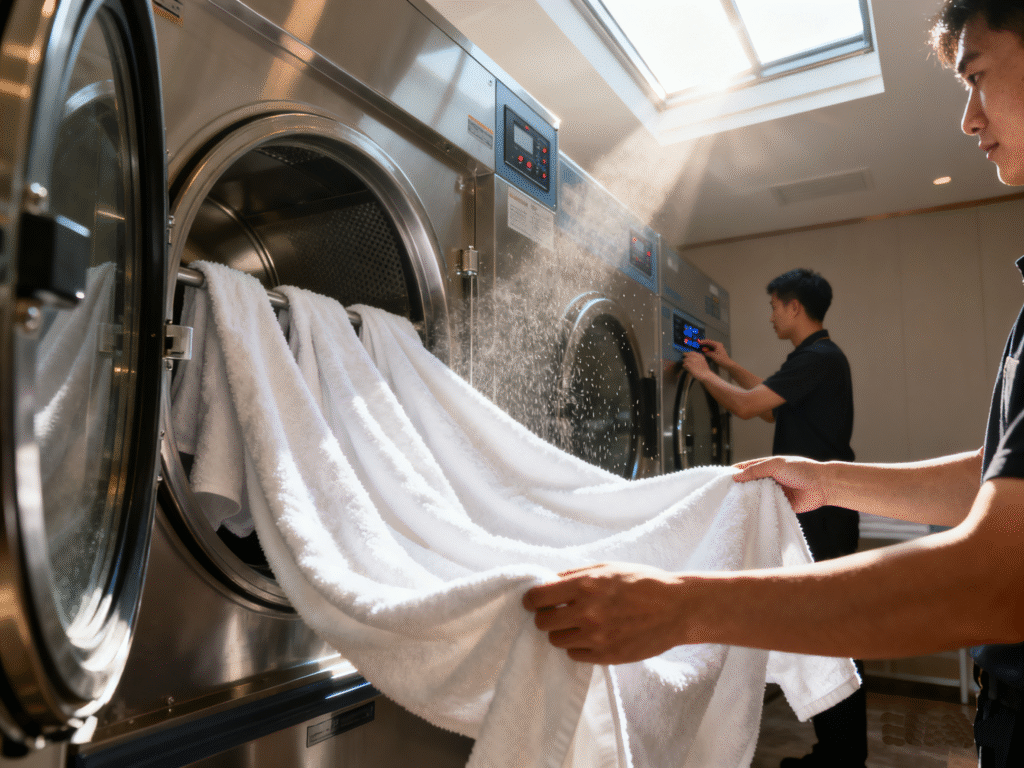
Drying technique plays a decisive role in maintaining softness. Overheating can stiffen towels by melting microfibers, while under-drying leaves them damp and musty.
Hotels typically use commercial tumble dryers with moisture sensors, which automatically stop once the towel reaches optimal dryness — usually around 5–8% residual moisture.
Line drying, while eco-friendly, can produce stiffer towels due to evaporation tension. To balance eco goals and softness, some hotels use hybrid systems: pre-dry in low-heat tumblers, then air-finish in humidity-controlled rooms.
Eco-conscious resorts such as Bali’s COMO Hotels apply this hybrid method — maintaining energy efficiency while preserving their towels’ signature fluff.
The Role of Ironing and Towel Fluffing
Contrary to common belief, hotels rarely iron towels. Pressing crushes loops and flattens texture, making the towel less absorbent and less soft.
Instead, hotels use air-blast fluffers or mechanical “shakers.” These machines toss towels with bursts of warm air, loosening fibers and creating a fuller, airier hand feel.
This process — often called fiber relaxation — is what gives hotel towels their signature “cloud-like” quality after drying.
bchtowel integrates fluffing performance testing into its product development phase, ensuring that fibers recover softness and volume even after industrial drying cycles.
Finishing Touches and Quality Checks
Before towels reach guest rooms, they undergo visual and tactile inspection:
- Are fibers intact?
- Is the loop density even?
- Has the towel maintained whiteness and softness balance?
Housekeeping departments also rotate stock — typically every 70–100 washes for mid-tier hotels, and 120–150 for premium-grade towels.
Hotel towel manufacturer like bchtowel work closely with housekeeping managers to establish clear replacement cycles. Their data-driven “Towel Lifecycle Index” helps properties forecast reorder timing while reducing waste and ensuring consistent guest satisfaction.
How Do Hotels Keep Towels Soft Over Time — Maintenance, Rotation, and Storage
Towel Rotation Systems
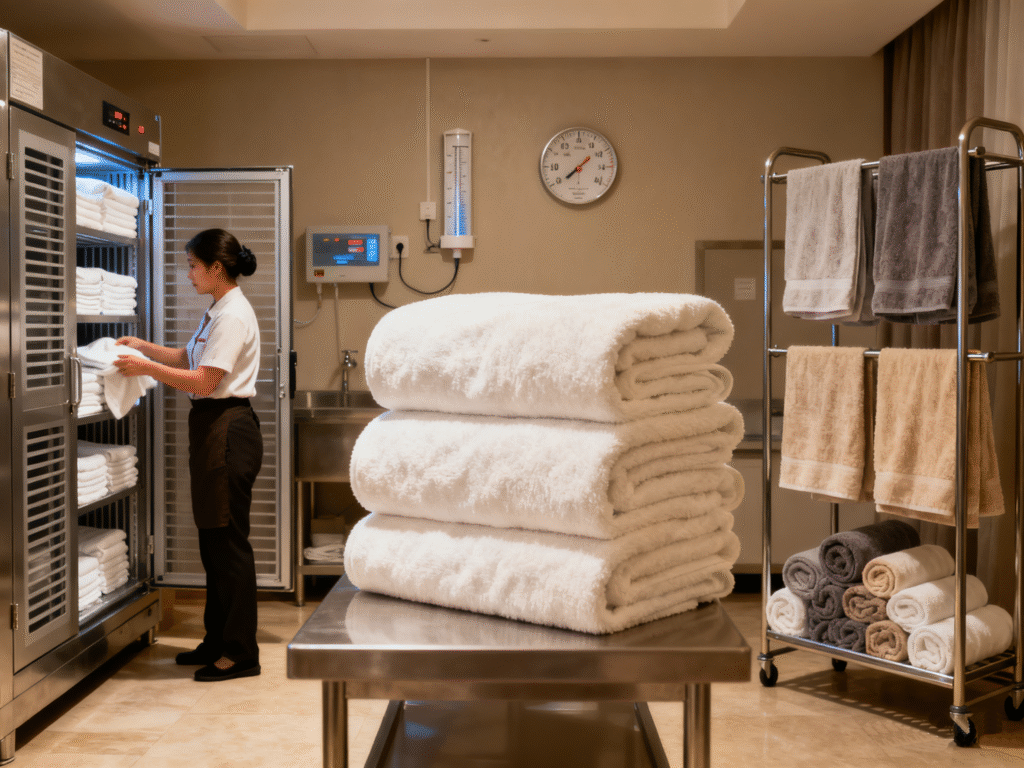
Towel rotation is a simple yet crucial system. Instead of reusing the same sets continuously, hotels implement a rotational inventory:
- Set A is in use.
- Set B is in laundry.
- Set C is resting.
This ensures that no single towel set is overwashed, maintaining softness longer.
For large resorts, towel rotation may be digitally managed — each batch tagged with barcodes or RFID chips to monitor usage cycles.
Proper Storage Conditions
Storage directly affects towel softness. Even perfectly laundered towels can lose freshness if stored improperly.
Key guidelines include:
- Maintain humidity below 60%.
- Ensure shelves are ventilated.
- Avoid direct sunlight, which oxidizes fibers.
Towels should be folded loosely to preserve airiness. Many hotels place sachets of silica gel or natural lavender bags to maintain a dry, fresh atmosphere.
Handling After Use
Hotels instruct staff never to leave damp towels in collection bags for extended periods. Moisture leads to mildew, odor, and fiber decay.
Instead, towels are briefly pre-dried or stored in dehumidified rooms before laundering — a practice that dramatically improves softness retention and hygiene.
bchtowel’s Professional Maintenance Solutions
To support large-scale operations, bchtowel provides pre-softened towel series with hydrophilic finishes, reducing the time needed for post-laundry fluffing. Their maintenance guides — tailored to each fabric type — ensure that softness remains consistent across hundreds of laundering cycles.
Advanced Secrets on How Hotels Keep Towels Soft — Beyond Conventional Methods
Eco-Friendly and Sustainable Fabric Innovations
Sustainability is now inseparable from hospitality. Many hotels are transitioning toward organic cotton, bamboo, or recycled polyester blends that maintain softness while reducing environmental impact.
Bamboo, for instance, offers natural antibacterial properties and an exceptionally smooth feel. However, its fiber strength varies, requiring careful blending — a challenge bchtowel addresses through advanced fiber engineering.
Technology-Driven Laundry Systems
Smart laundry systems now use IoT sensors to monitor load weight, detergent concentration, and fabric stress.
Some high-end hotels employ AI-driven systems that adjust cycle settings automatically based on towel fiber data, ensuring optimal softness preservation.
In the future, predictive analytics may alert hotel managers when a batch of towels nears its softness threshold — allowing proactive replacement before guest satisfaction dips.
Nanotechnology and Advanced Textile Treatments
Next-generation towels are being designed with nanocoatings that repel residues while maintaining softness.
bchtowel’s R&D division explores treatments combining anti-bacterial protection and micro-coating softness retention — ideal for hotels prioritizing hygiene and texture performance.
These treatments create a microscopic buffer on cotton loops, preventing mineral buildup and friction — a small innovation with major softness benefits.
Common Myths About How Hotels Keep Towels Soft — Debunked
“Hotels Use Fabric Softener Every Time”
False. Overuse of softeners creates waxy coatings that reduce absorbency. Hotels typically use them sparingly or substitute vinegar-based neutralizers to maintain fluff.
“Bleach Makes Towels Cleaner and Softer”
Bleach actually weakens fibers over time. Professional laundries use oxygen-based brighteners instead, achieving cleanliness without compromising softness.
“Soft Towels Mean Expensive Towels”
Softness depends more on fiber treatment and care than price. Even mid-tier hotels can achieve five-star texture with proper washing systems — something bchtowel helps its partners achieve through education and maintenance guidance.
How Do Hotels Keep Towels Soft While Staying Eco-Friendly
Green Laundry Practices
Hotels worldwide are rethinking traditional laundry methods:
- Cold-water enzyme washing saves energy.
- Low-heat drying protects fibers.
- Load optimization reduces waste.
Water Recycling and Waste Reduction
Luxury resorts increasingly use closed-loop laundry systems that recycle up to 80% of wash water. This reduces environmental footprint and detergent demand while maintaining towel quality.
Example: A Maldives resort reduced water use by 40% without losing towel softness — thanks to smart recycling and pH control.
bchtowel’s Sustainability Approach
bchtowel integrates sustainability at every stage: OEKO-TEX® certified fabrics, energy-efficient weaving, and minimal-water dyeing. Their eco-lines help hotels meet environmental certifications (e.g., LEED, Green Key) without compromising guest comfort.
How Do Hotels Keep Towels Soft at Scale — Logistics and Supply Chain Management
Partnering with Professional Suppliers
Consistency is king in hospitality. Hotels rely on suppliers who ensure:
- Stable quality and GSM standards.
- Colorfast dyes and long fiber durability.
- Reliable replenishment cycles.
bchtowel partners with hotels worldwide, offering scalable procurement solutions — from boutique custom orders to mass shipments for large chains — ensuring each towel batch matches prior shipments in softness and performance.
Inventory Forecasting and Lifecycle Management
Hotel managers often underestimate how much towel softness depends on inventory strategy. Overstocking leads to aging towels in storage; understocking causes overuse and stiffness.
Advanced forecasting models — like bchtowel’s Lifecycle Analytics — predict optimal reorder timing based on actual fiber wear data, balancing cost, sustainability, and guest satisfaction.
Actionable Checklist — How to Make Towels Soft Like Hotels (B2B Edition)
- Choose ring-spun, long-staple cotton with GSM 600–700.
- Use pH-neutral detergent; avoid excessive softeners.
- Maintain soft water or install filtration.
- Tumble dry gently with moisture sensors.
- Rotate towels and store in ventilated conditions.
- Conduct quarterly water hardness tests.
- Partner with a reliable supplier like bchtowel for consistent quality and technical support.
The Future of Hotel Towel Softness — Innovation Meets Experience
Tomorrow’s hotel experience will be defined by touch. From AI-monitored laundry systems to next-gen eco-fibers, the pursuit of perfect softness will merge technology, design, and sensory science.
bchtowel continues to pioneer in this field — developing smart textiles that adjust to humidity, resist fiber fatigue, and maintain comfort through hundreds of washes. As hospitality evolves toward a sustainability-driven, experience-first model, softness will remain the universal language of care.
Redefining Softness as the Standard of Luxury
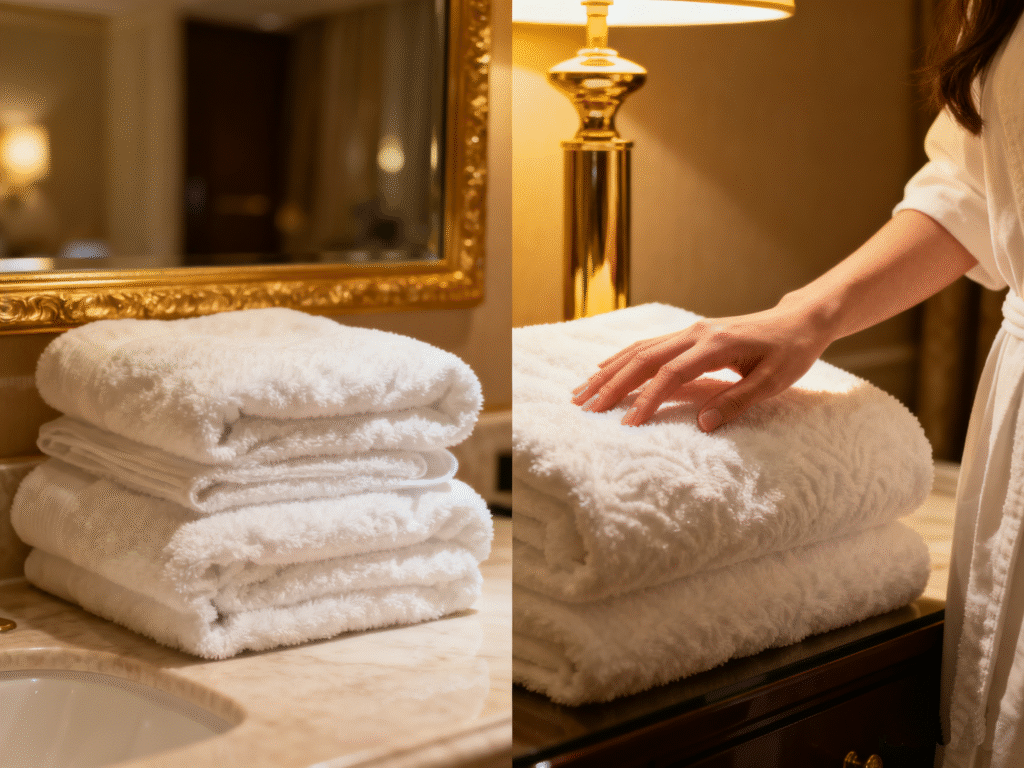
Towel softness is more than comfort — it’s a reflection of a hotel’s values, precision, and respect for guests. Behind every plush towel lies a network of expertise: from textile science and water chemistry to supply chain logistics.
Hotels that master this balance elevate not only guest satisfaction but also brand perception. And for B2B buyers, understanding how hotels keep towels soft means unlocking the blueprint to consistent, sustainable, luxurious hospitality.
As bchtowel defines it:
“Softness isn’t just a texture — it’s the feeling of care woven into every fiber.”
FAQ
Use long-staple cotton towels, wash with pH-neutral detergent, rinse thoroughly, and tumble dry on low heat. Avoid overusing fabric softener. Rotate towels regularly.
Hotels use high-quality cotton, controlled detergent dosing, water softening, oxygen-based bleaches, and professional laundering cycles with multiple rinses and careful drying to maintain softness and whiteness.
Wash towels separately, use warm water with mild detergent, avoid overdosing detergent, rinse thoroughly, and tumble dry with low heat or dryer balls to maintain fluff.
Yes, dryer balls help aerate fibers, reduce clumping, and speed drying, which keeps towels soft without chemical softeners.
Hard towels are usually caused by residual detergent, hard water minerals, or over-drying. Proper rinsing and water softening prevent stiffness.
For personal use, every 3–4 uses is recommended. In hotels or high-use settings, towels are typically washed after each guest use or daily in high-volume areas.