Few details in a hotel room feel as luxurious as a stack of perfectly white, cloud-soft towels. They symbolize cleanliness, comfort, and trust. But if you’ve ever tried to maintain that kind of bright whiteness at home, you know it’s not so easy. So—how do hotels keep towels white, wash after wash, without them turning yellow, gray, or rough?
This comprehensive guide unveils the full process—from chemistry and psychology to equipment and environmental trends—showing both the science and the story behind the world’s whitest towels.
Why “How Do Hotels Keep Towels White” Has Become a Symbol of Clean Luxury
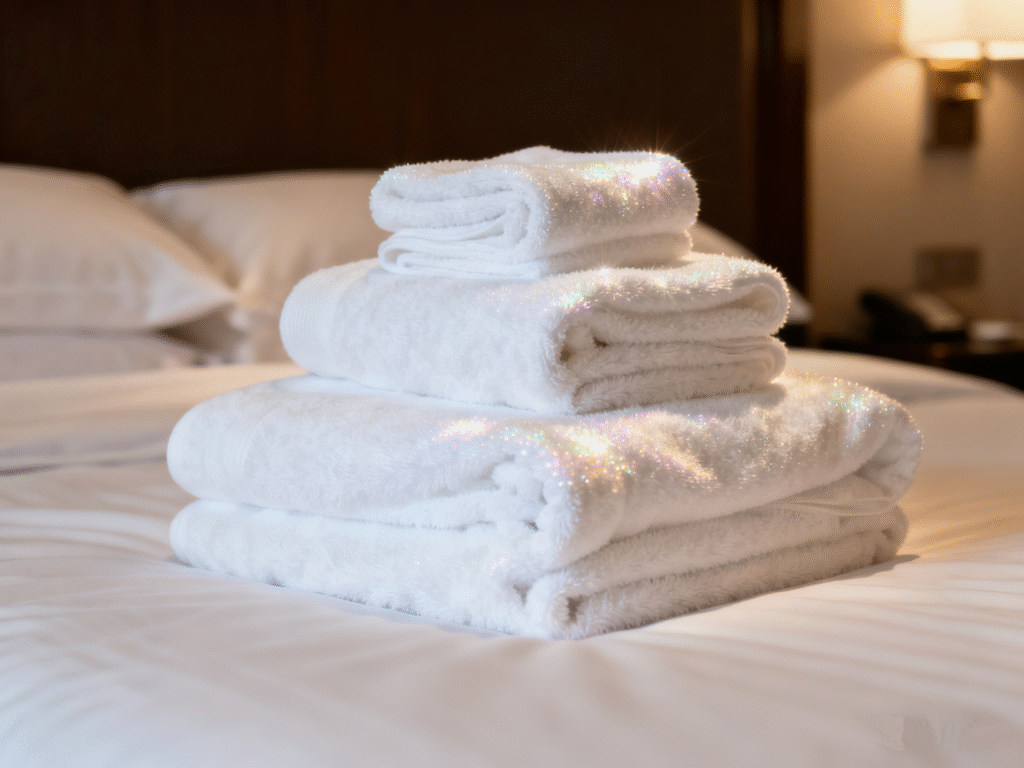
The psychology of whiteness
White towels have become a near-universal shorthand for purity. Hotels use white not just for aesthetics but for reassurance. A 2023 hospitality perception study found that 83% of guests associate white linens with better hygiene standards. It’s no accident: hotels discovered decades ago that white towels subtly broadcast confidence—because you can’t hide stains on white.
The practical advantages of white linens
White towels are simpler to manage operationally. They can be bleached, sanitized, and color-matched easily across bulk orders. A housekeeping director once joked that “white doesn’t go out of style—just out of stock.”
Commercial suppliers like bchtowel note that hotels choose white not only for its aesthetic, but because it simplifies laundering and inventory rotation. Different towel shades require separate wash cycles and chemical treatments; white can all be cleaned together efficiently.
Understanding the Science Behind “How Do Hotels Keep Towels White”
The chemistry of brightness
Whiteness is both optical and chemical. When you wash towels, body oils, sebum, and minerals react with detergent residues, creating a yellow or gray hue. To counter this, hotels use bleaches and optical brighteners—chemicals that absorb UV light and re-emit blue light, making fabric appear even whiter to the human eye.
Optical brighteners don’t actually remove dirt—they trick the eye by shifting the color balance. Combined with deep cleaning at high temperatures, this maintains that signature “just-laundered” brightness.
The role of pH and temperature
Commercial laundries operate in tightly controlled conditions:
- Washing at 70–90 °C (160–194 °F) removes oils and kills bacteria.
- Alkaline detergents (pH > 9) break down fatty soils.
- Neutralization rinses restore the towel’s pH to prevent fiber damage.
According to bchtowel’s quality testing reports, maintaining the right pH balance can extend towel life by up to 25%—a crucial margin for large hotel operations.
The Full Process of “How Do Hotels Keep Towels White” from Laundry to Linen Room
Step 1: Sorting and pre-treatment
Hotels begin with sorting by fabric weight (GSM) and soil level. Severely stained towels are soaked in a pre-wash solution of warm water, detergent, and sometimes oxygen bleach. This step loosens oils before the main wash, preventing re-deposition.
Some luxury hotels even use enzyme-based pre-soaks, which digest organic residues without harsh bleach. The enzymes act like microscopic scissors, cutting apart protein and fat molecules.
Step 2: Detergent dosing and main wash
In commercial washers, detergents are injected automatically. These formulations contain:
- Surfactants to lift dirt,
- Builders to soften water and control pH,
- Enzymes for biological soils,
- Optical brighteners for visual whiteness.
Systems precisely control concentration—often down to milliliters per kilogram of fabric. Too little leaves gray residues; too much weakens fibers.
bchtowel partners with regional laundries to optimize detergent dosing, ensuring minimal chemical waste and consistent whiteness across thousands of towels.
Step 3: Bleaching—oxygen vs. chlorine
Hotels use two primary bleaching systems:
- Oxygen bleach (hydrogen peroxide or sodium percarbonate): gentler, color-safe, sustainable.
- Chlorine bleach (sodium hypochlorite): powerful disinfectant, but can yellow fabric and weaken cotton fibers over time.
Modern hotels often use oxygen bleach cycles for routine cleaning and reserve chlorine for heavy-stain restoration. The precise chemistry depends on fabric GSM and fiber length; longer-staple cotton tolerates stronger oxidizers.
Step 4: Rinsing and neutralization
After bleaching, towels are rinsed multiple times with fresh water. Neutralizing agents—like acetic acid or sodium bisulfite—balance the pH and remove residual chlorine. This prevents fiber brittleness and skin irritation.
Step 5: Drying, fluffing, and folding
Hotels use industrial tumble dryers equipped with moisture sensors. Over-drying causes yellowing and stiff texture; under-drying invites mildew.
For softness, some operations inject compressed air (“air-fluff” phase) rather than liquid softeners, maintaining absorbency.
Folding follows precise standards—cooling towels first to lock in texture before stacking.
Inside the Facilities: Equipment That Makes “How Do Hotels Keep Towels White” Possible
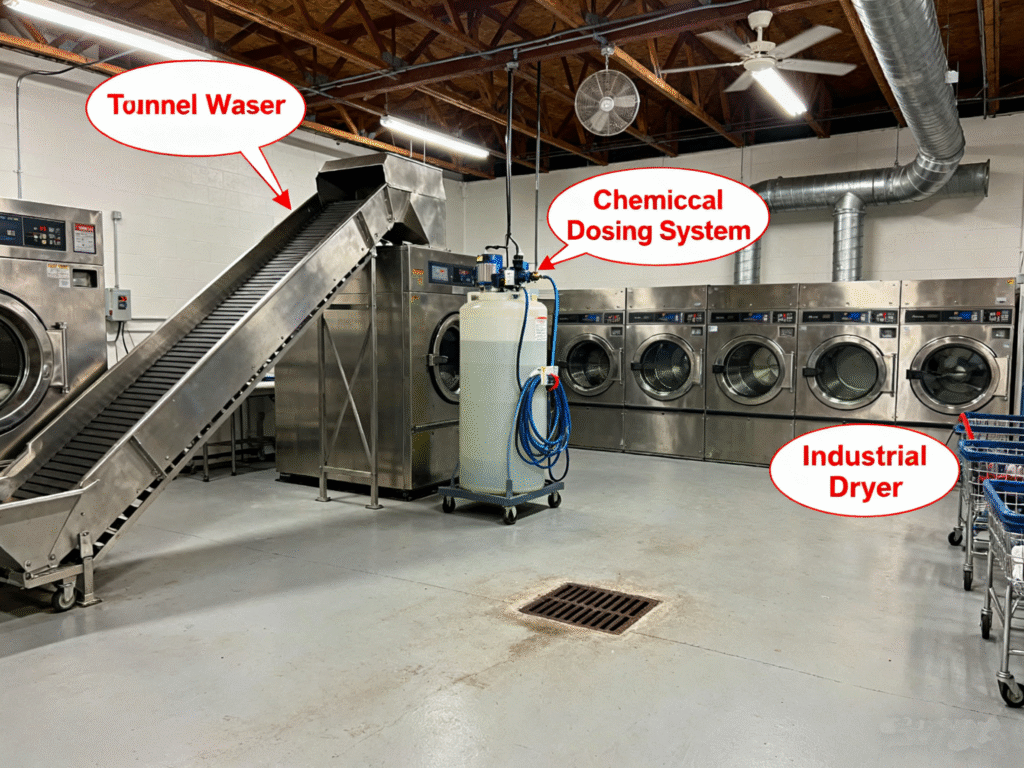
Tunnel washers and high-capacity extractors
Commercial laundries process hundreds of kilograms per cycle. Tunnel washers move linen continuously through chambers with variable chemistry, temperature, and agitation. This ensures efficient soil removal with minimal water use.
Automated chemical dosing
Chemical injection systems track load weight and adjust formulas in real time. Some even use conductivity sensors to measure detergent concentration in rinse water—a level of precision home machines can’t match.
bchtowel’s partner laundries use programmable logic controllers (PLCs) that log detergent and bleach data for every batch, ensuring full traceability and consistency across shipments.
Water softening and filtration
Hard water deposits minerals (calcium, magnesium) that dull whites. Hotels combat this using ion-exchange softeners or reverse-osmosis filters. Treated water keeps detergents effective and preserves brightness.
Quality control and linen audits
Large hotels perform periodic whiteness index measurements (using reflectometers) and tensile-strength tests. Any towel falling below brightness or softness standards is re-treated or replaced.
This data helps procurement teams forecast replacement cycles—preventing over-laundering and waste.
Sustainability and Environmental Innovation in “How Do Hotels Keep Towels White”
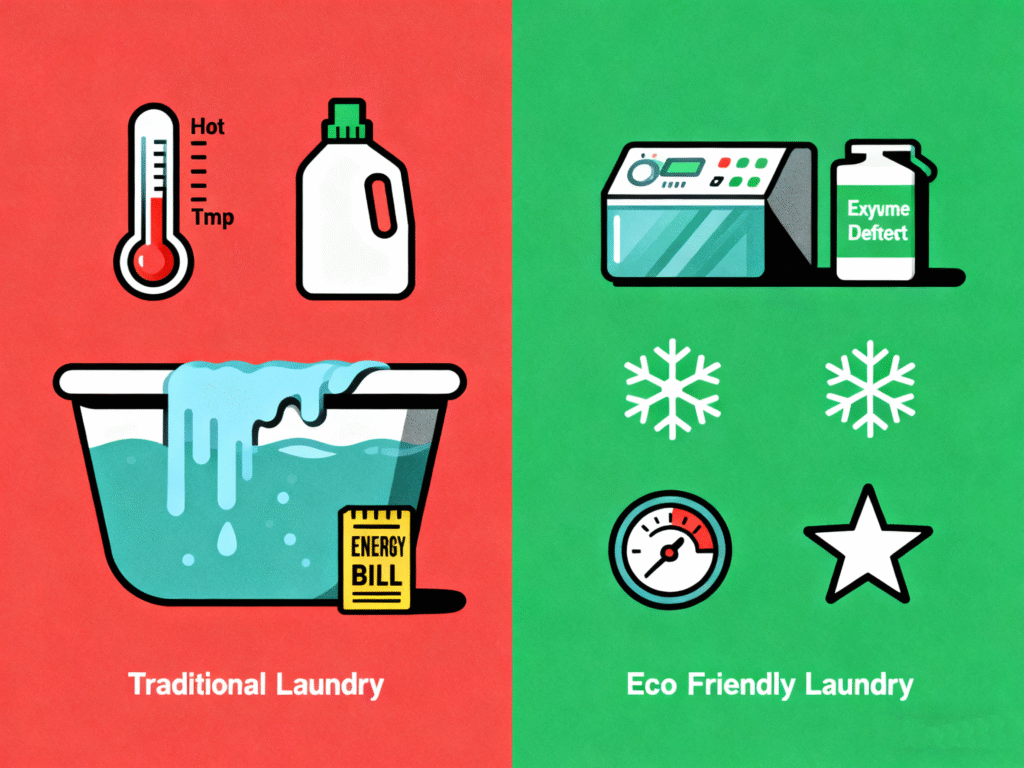
The environmental challenge
Traditional laundry processes consume vast amounts of water, energy, and chemicals. An average 200-room hotel washes over 2 tons of linen daily, producing thousands of liters of graywater.
Emerging eco-technologies
- Ozone laundering systems: Use ozone gas in cold water to oxidize stains, cutting energy use by 30%.
- Enzyme-enhanced detergents: Enable effective cleaning at lower temperatures.
- Heat-recovery systems: Capture waste heat from rinse water to pre-warm incoming loads.
- Recycled water loops: Treat and reuse up to 70% of rinse water.
bchtowel has been piloting low-temperature peroxide processes with partner laundries, maintaining whiteness while reducing carbon emissions by up to 20%.
Biodegradable formulations
New surfactant blends derived from coconut or palm oils replace petrochemical versions. They perform equally well but break down faster in wastewater.
Social responsibility and certifications
Hotels and suppliers increasingly pursue OEKO-TEX and ISO 14001 certifications. These ensure chemicals, dyes, and processes meet environmental and safety standards.
The Economics of “How Do Hotels Keep Towels White”: Cost, Lifespan, and ROI
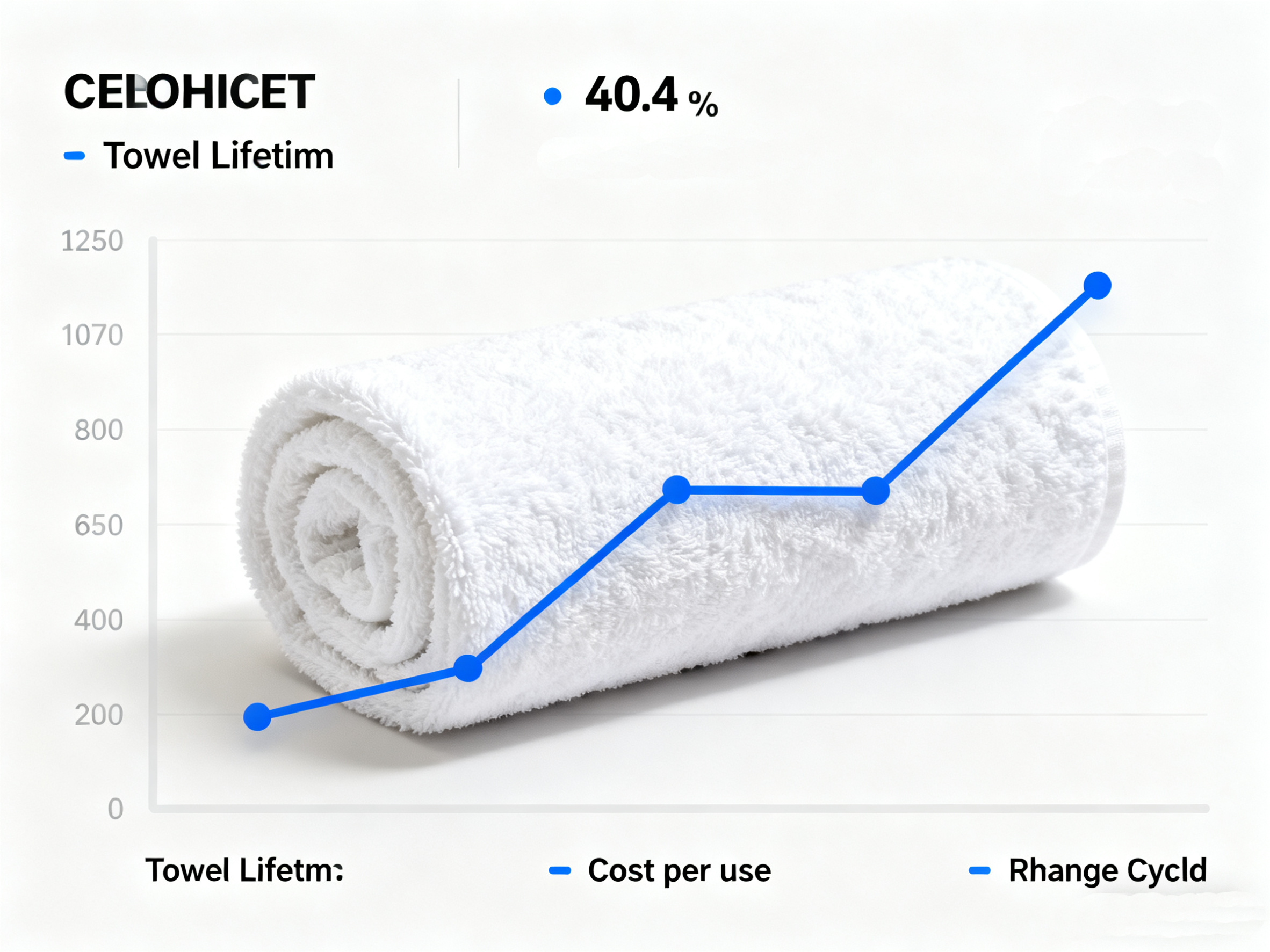
The cost equation
Keeping towels white isn’t just chemistry—it’s economics. Hotels calculate cost per towel per use. A premium 600 GSM towel might cost $10 but survive 200 wash cycles, equating to 5 cents per use. A cheaper towel that lasts only 80 cycles costs 12 cents per use—more than double over time.
Factors influencing lifespan
- Water hardness and pH balance
- Wash temperature
- Chemical concentration
- Fiber quality (Egyptian vs. Pakistani cotton)
- Drying technique and handling
Replacement protocols
Hotels retire towels when whiteness or softness drops below threshold—often measured with whiteness index values below 85%.
bchtowel’s supply program provides serialized tracking, allowing hotels to trace towel age and cycle count, optimizing replacement schedules and reducing waste.
Myths and Misconceptions About “How Do Hotels Keep Towels White”
Myth 1: Hotels use chlorine bleach in every wash
Not true. Constant chlorine bleaching weakens cotton. Most hotels reserve it for occasional deep-cleaning cycles, relying mainly on oxygen-based systems.
Myth 2: Fabric softener makes towels softer
Softener residue can actually reduce absorbency by coating fibers. Hotels prefer controlled drying and airflow to maintain plushness.
Myth 3: Hot water always whitens better
Heat helps, but too high a temperature can set in protein stains. Modern detergents and enzymes now perform effectively at 40–60 °C.
Myth 4: Any detergent will do
Commercial detergents are engineered for specific soil loads and water hardness. Home detergents often lack builders or enzyme combinations required for heavy-duty stains.
How to Apply “How Do Hotels Keep Towels White” at Home or in Small B&Bs
Step-by-step home guide
- Sort towels by color and soil level.
- Pre-soak in hot water + oxygen bleach (1 scoop per 4 L) for 30 minutes.
- Main wash: hot cycle (60 °C) with detergent containing enzymes and optical brighteners.
- Add vinegar rinse (½ cup) to neutralize residues.
- Dry fully, but avoid over-heating.
- Fluff with wool dryer balls or air setting for softness.
Tools and ingredients to try
- Oxygen bleach (sodium percarbonate)
- Enzyme detergent (protease, lipase, amylase blend)
- Distilled white vinegar for neutralization
- Soft water or a descaling filter
Troubleshooting table
| Problem | Likely Cause | Fix |
|---|---|---|
| Yellowing | Iron/mineral in water | Use oxygen bleach + water softener |
| Stiffness | Detergent residue | Rinse with vinegar or citric acid |
| Dullness | Optical brightener loss | Rewash with brightener detergent |
| Musty smell | Under-drying | Dry completely; store in ventilated area |
Mini-case example: The “bchtowel home test”
In a 2025 comparison, bchtowel replicated hotel-grade whiteness at home using its recommended peroxide-based detergent and low-temp wash cycle. After 20 washes, whiteness index remained > 90%, showing that scientific laundering isn’t just for hotels anymore.
The Future of “How Do Hotels Keep Towels White”: Innovation Meets Sustainability

Smart laundries
IoT-enabled washers monitor pH, conductivity, and temperature in real time, auto-adjusting cycles for each batch. Data analytics can predict when towels are nearing end-of-life based on fabric stress readings.
Biotechnology in cleaning
Next-gen bio-enzymes promise deeper cleaning at 30 °C, cutting energy use drastically. Enzymatic bleach activators may soon replace traditional oxidizers altogether.
Circular textile economy
Some luxury hotels are adopting closed-loop programs, where retired towels are shredded and spun into new fiber blends. bchtowel has begun exploring fiber-recycling initiatives to reduce landfill waste and promote full material recovery.
Green chemistry
Future detergents may rely on electrochemical oxidation—cleaning fabrics with active oxygen generated on site, removing the need for transport and storage of hazardous bleach.
Conclusion: The Art and Science of “How Do Hotels Keep Towels White”
When you step out of a hotel shower and wrap yourself in a crisp, spotless towel, you’re experiencing precision science disguised as effortless comfort. Achieving that white isn’t luck—it’s chemistry, engineering, and process mastery.
From enzymes that digest stains to optical brighteners that bend light, every detail contributes to an illusion of perfection. And brands like bchtowel—which collaborate with professional laundries and sustainability researchers—are helping bridge the gap between industrial laundry science and home practicality.
Whiteness, it turns out, isn’t just a color. It’s a carefully engineered standard—one that tells a story of cleanliness, care, and continual innovation.
FAQ
Hotels use a combination of industrial detergents, oxygen-based or chlorine bleach, optical brighteners, hot water, and controlled drying to keep towels white and soft.
Use hot water, enzyme-based detergents, oxygen bleach, and thorough rinsing, followed by proper drying. Avoid overuse of fabric softeners, which can dull whiteness.
Pre-soak towels in oxygen bleach or a solution of water and vinegar, then wash in hot water with a suitable detergent. Repeat if necessary.
Baking soda can help deodorize and soften towels but does not effectively whiten heavily stained or yellowed towels.
Oxygen or chlorine bleach is best for whitening and disinfecting; vinegar is useful for neutralizing detergent residues and softening, but it does not whiten as effectively.